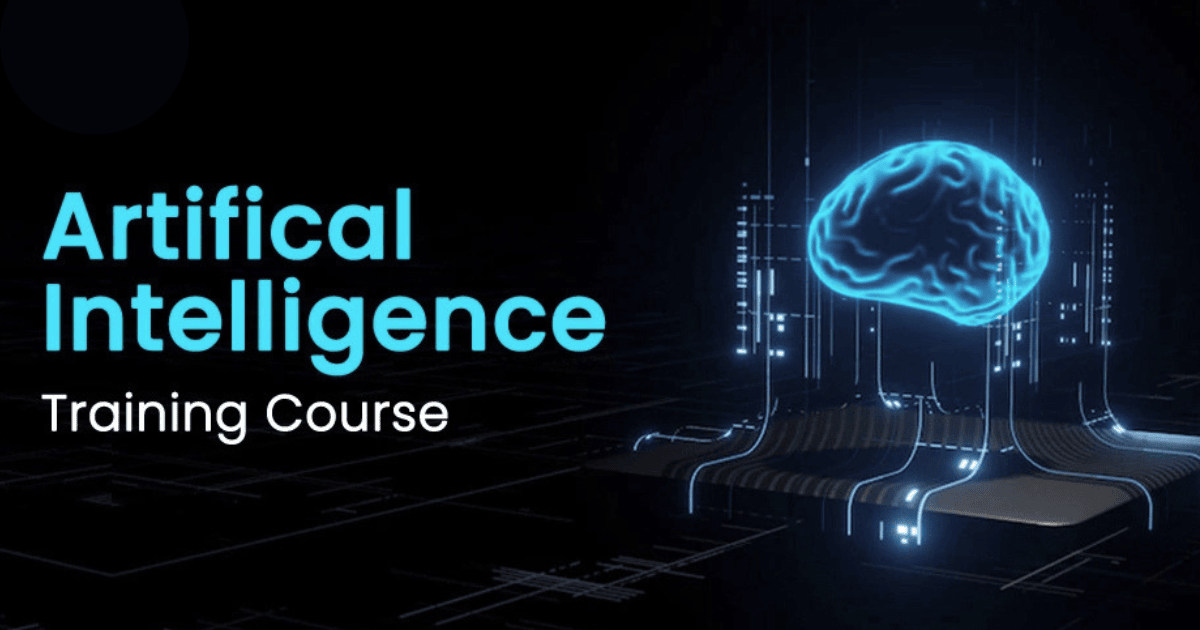
Career in Artificial Intelligence as a Beginner: Complete Roadmap to Success
TechVision
March 26, 2026
Artificial Intelligence
Artificial Intelligence has transitioned from science fiction to everyday reality, fundamentally reshaping industries across the globe. From healthcare and finance to automotive and entertainment, AI applications drive innovation and competitive advantage. For beginners looking to enter the tech field, a career in artificial intelligence offers exceptional opportunities, competitive salaries, and the chance to work on transformative technologies. Whether you’re a fresh graduate or career-changer, pursuing an Artificial Intelligence Course in Pune or exploring the best artificial intelligence course available equips you with essential skills. This comprehensive guide outlines your journey from beginner to AI professional, highlighting why an AI Training Guide is crucial for navigating this dynamic field successfully.
Why Choose a Career in Artificial Intelligence?
The artificial intelligence job market is experiencing explosive growth. According to industry reports, AI-related job openings increased by 74% in 2023 alone, with demand continuing to accelerate. Organizations across sectors desperately seek AI professionals who can develop algorithms, build machine learning models, and implement intelligent systems.Compensation in AI careers significantly exceeds traditional IT roles. Entry-level AI engineers earn $80,000-$120,000 annually, with senior positions commanding $200,000+. An Artificial Intelligence Course in Pune or best artificial intelligence course directly translates to career advancement and substantial financial benefits. Beyond compensation, AI careers offer intellectual challenges, creative problem-solving opportunities, and the satisfaction of building technology that impacts millions.
Artificial Intelligence refers to computer systems designed to perform tasks requiring human-like intelligence. These tasks include learning from data, recognizing patterns, understanding language, and making decisions. AI encompasses three main categories: Narrow AI (specialized tasks), General AI (human-level intelligence), and Super AI (theoretical future concept).Understanding these distinctions is foundational. An AI Training Guide clarifies how different AI types apply to real-world problems, essential knowledge for aspiring professionals.
Machine Learning vs Deep Learning vs AI
Many beginners confuse these terms. Machine Learning (ML) is a subset of AI enabling systems to learn from data without explicit programming. Deep Learning (DL) is a specialized ML approach using neural networks with multiple layers. Understanding these relationships through comprehensive best artificial intelligence course programs prevents knowledge gaps affecting your career progression.
Key AI Technologies and Applications
Natural Language Processing (NLP) enables machines to understand and generate human language. Computer Vision allows systems to interpret images and video. Reinforcement Learning trains systems through rewards and penalties. Robotics combines AI with physical systems. An effective Artificial Intelligence Course in Pune covers these technologies thoroughly, preparing you for diverse AI roles.
Beginner Level: Building Your Foundation
Essential Mathematics and Statistics
Successful AI careers require solid mathematical foundations. Linear algebra forms the basis of machine learning algorithms. Calculus enables understanding optimization techniques. Probability and statistics are crucial for model evaluation and uncertainty quantification. Don’t let math intimidate you—an AI Training Guide breaks complex concepts into manageable pieces, and many beginners without advanced math backgrounds successfully transition to AI.
Programming Languages for AI
Python dominates AI development due to its simplicity and rich libraries. Learn Python fundamentals including variables, loops, functions, and object-oriented programming. Master data manipulation with pandas and NumPy libraries. Understanding programming basics through a best artificial intelligence course is non-negotiable for AI careers.R is valuable for statistical analysis. Java, C++, and Scala have niche AI applications. However, Python proficiency is essential—it’s used in 80% of AI projects worldwide.
Understanding Data and Preprocessing
Data is AI’s lifeblood. Learn data collection, storage, and management principles. Master data cleaning techniques—removing duplicates, handling missing values, and fixing inconsistencies. Data quality directly impacts model performance. An Artificial Intelligence Course in Pune emphasizes data preprocessing fundamentals, as 70% of AI work involves data preparation rather than model development.
Introduction to Machine Learning Concepts
Understand supervised learning (classification, regression), unsupervised learning (clustering, dimensionality reduction), and semi-supervised learning. Learn about training sets, test sets, and validation—fundamental concepts every AI professional must grasp. These basics form the foundation for advanced work.
Intermediate Level: Developing Practical Skills
Core Machine Learning Algorithms
Master linear regression for predicting continuous values and logistic regression for binary classification. Learn decision trees, random forests, and support vector machines (SVM). Understand k-means clustering and hierarchical clustering for unsupervised tasks. An AI Training Guide progresses logically through algorithms, building competency systematically.
Deep Learning Fundamentals
Neural networks form the foundation of modern AI. Understand perceptrons, activation functions, and backpropagation. Learn about convolutional neural networks (CNNs) for image processing and recurrent neural networks (RNNs) for sequential data. Transformers, which power large language models, represent cutting-edge architecture. These topics are comprehensively covered in the best artificial intelligence course programs.
Working with Popular AI Frameworks
Tensor Flow and PyTorch dominate AI development. Tensor Flow, developed by Google, offers scalability and production deployment. PyTorch, developed by Meta, provides flexibility for research. Learn to build, train, and evaluate models using these frameworks. Hands-on experience with frameworks through an Artificial Intelligence Course in Pune is essential for career readiness.
Feature Engineering and Model Optimization
Feature engineering—selecting and creating relevant input variables—dramatically improves model performance. Learn techniques like normalization, encoding categorical variables, and dimensionality reduction. Master hyper parameter tuning to optimize model accuracy. These practical skills separate competent AI professionals from novices.
Model Evaluation and Validation
Understand metrics like accuracy, precision, recall, and F1-score for classification. Learn RMSE and MAE for regression. Master cross-validation techniques preventing overfitting. Understanding model evaluation prevents deploying poorly performing systems. An effective AI Training Guide emphasizes these validation concepts thoroughly.
Advanced Level: Specialization and Expertise
Natural Language Processing (NLP)
NLP enables machines to process human language. Learn tokenization, stemming, lemmatization, and word embedding’s. Master transformer models like BERT and GPT. Understand applications including sentiment analysis, machine translation, and question-answering systems. NLP is one of AI’s most exciting and lucrative specializations. The best artificial intelligence course programs offer NLP specialization tracks.
Computer Vision
Computer vision enables machines to interpret visual information. Learn image classification, object detection, semantic segmentation, and instance segmentation. Master CNN architectures like ResNet, VGG, and YOLO. Understand applications in autonomous vehicles, facial recognition, and medical imaging. Computer Vision specialists command premium salaries.
Reinforcement Learning and Robotics
Reinforcement learning trains agents through interaction with environments. Learn Markov decision processes, Q-learning, and policy gradient methods. Understand applications in game AI, autonomous systems, and robotics. While advanced, RL offers fascinating career opportunities. An Artificial Intelligence Course in Pune may offer specialized RL tracks for advanced learners.
Generative AI and Large Language Models
Generative AI creates new content—text, images, code, and more. Large Language Models (LLMs) like GPT-4, Claude, and LLaMA revolutionize AI applications. Learn fine-tuning techniques, prompt engineering, and responsible AI practices. Generative AI represents the fastest-growing AI specialization with exceptional career prospects.
AI Ethics and Responsible AI
As AI becomes widespread, ethical considerations grow paramount. Learn about bias in AI systems, fairness, explain ability, and transparency. Understand regulatory requirements and responsible AI frameworks. AI professionals with ethics expertise command significant competitive advantages. The AI Training Guide increasingly emphasizes ethical AI principles.
AI Career Paths and Opportunities
AI Engineer/Machine Learning Engineer
Develops and deploys machine learning models. Requires strong programming skills, ML knowledge, and system design understanding.
Data Scientist
Analyses complex datasets to extract insights and drive business decisions. Emphasizes statistical analysis, visualization, and communication.
AI Research Scientist
Conducts cutting-edge AI research pushing technological boundaries. Typically requires advanced degrees. Positions at major tech companies (Google, OpenAI, Deep Mind) are highly competitive.
NLP Specialist
Focuses exclusively on natural language processing applications. High demand for chatbots, translation systems, and content analysis
Computer Vision Engineer
Specializes in image and video processing. Critical for autonomous vehicles, medical imaging, and surveillance.
AI Product Manager
Manages AI product development, combining technical knowledge with business acumen. Growing field with excellent compensation.
Choosing the Right Artificial Intelligence Training
When selecting an Artificial Intelligence Course in Pune or evaluating the best artificial intelligence course, consider comprehensive curriculum ensuring progression from fundamentals to advanced specializations, hands-on projects using real datasets and business scenarios, current technologies covering cutting-edge frameworks and methodologies, industry experts as instructors with real-world experience, certification value recognized by employers, practical lab environments with GPU access and cloud resources, career support including job placement and interview preparation, community and networking opportunities, and lifetime access with updates as AI evolves.An exceptional AI Training Guide provides roadmap clarity, preventing overwhelm in this rapidly evolving field.
Building Your AI Portfolio
Practical projects demonstrate capabilities to employers. Start with Kaggle competitions—platforms hosting data science challenges. Build end-to-end projects: web scrapers collecting data, models solving specific problems, and deployments on cloud platforms. Create a GitHub portfolio showcasing your work. Contribute to open-source AI projects like TensorFlow or PyTorch.Write technical blog posts explaining AI concepts. This demonstrates communication skills and deepens your understanding. Participate in AI hackathons and competitions. Real projects outweigh degrees on resumes.
AI Industry Trends and Future Outlook
Large Language Models: LLMs continue advancing, creating new opportunities in generative AI, prompt engineering, and fine-tuning.Multimodal AI: Systems processing multiple data types (text, images, audio) simultaneously represent emerging AI frontier.Edge AI: Deploying AI models on edge devices (smartphones, IoT devices) rather than cloud servers creates new challenges and opportunities.Responsible AI: Growing emphasis on fairness, transparency, and ethical AI implementations across organizations.AI Automation: AutoML tools automate model selection and hyper parameter tuning, democratizing AI while creating new specialist roles.These trends shape hiring demands and career trajectories significantly.
Practical Roadmap: Your First 6 Months
Month 1-2: Master Python programming and mathematical foundations through an Artificial Intelligence Course in Pune or best artificial intelligence course. Complete tutorials, solve coding problems, build small projects.
Month 3:
Learn machine learning fundamentals. Implement algorithms from scratch and using scikit-learn. Participate in Kaggle beginner competitions.
Month 4: Choose a specialization—NLP, Computer Vision, or general ML. Dive deeper into your chosen area using an AI Training Guide specific to your interests.
Month 5: Build 2-3 substantial projects showcasing your specialization. Deploy projects to cloud platforms. Document everything thoroughly.
Month 6: Network with AI professionals, contribute to open-source projects, and prepare job application materials. Start your career search.
Solution: Use AI Training Guide resources breaking math into intuitive explanations. Many AI professionals developed mathematical expertise after learning AI, not before.
Challenge: Rapid field evolution causes anxiety.
Solution: Focus on fundamentals that remain stable (linear algebra, basic algorithms). Stay current through blogs and podcasts. A best artificial intelligence course with ongoing updates helps.
Challenge:GPU costs for training models.
Solution: Leverage free options—Google Colab, Kaggle notebooks, cloud free tiers. Build skills before worrying about expensive infrastructure.
Challenge: Impostor syndrome and self-doubt.
Solution: Remember everyone starts as a beginner. Focus on consistent learning and small wins. Join communities where beginners support each other.
Salary Expectations and Job Market
AI professionals enjoy exceptional job market conditions. Unemployment rates for AI specialists remain below 1%, compared to 5-6% overall tech unemployment. Demand significantly exceeds supply, creating favourable negotiating conditions.Geographic location matters significantly. San Francisco, Seattle, New York, Boston, and Bangalore offer highest salaries but higher cost of living. Remote work increasingly democratizes AI careers geographically.Specializations command premiums. Generative AI and LLM specialists earn 20-30% premiums over general ML engineers. Experienced practitioners receive multiple job offers regularly.
Conclusion
A career in artificial intelligence offers exceptional opportunities for beginners willing to commit to learning. The field demands continuous growth AI evolves rapidly, requiring lifelong learning commitment. However, this dynamism creates endless fascination and advancement opportunities.Whether through an Artificial Intelligence Course in Pune, an AI Training Guide, or the best artificial intelligence course available, investing in quality education positions you for success. The AI revolution isn’t coming—it’s here. Organizations desperately need skilled professionals to build intelligent systems solving real-world problems.Start your AI journey today. Master fundamentals, build projects, develop specialization, and enter a field offering intellectual challenges, financial rewards, and the satisfaction of shaping the future. Your AI career awaits.